A Study in Structure
Japanese roofs have a distinctive presence. From a distance, their silhouettes can appear calm and remarkably simple. Look closer, however, and that simplicity reveals an intricate system of overlapping planes, repeating lines, raised edges, and carefully considered transitions.
Nothing feels arbitrary.
The roof does not simply sit above the architecture. Its structure defines the character of the building—creating weight in some areas, lightness in others, and a continuous visual rhythm across the form. That relationship between structure and silhouette became a starting point for Torayoshi.


EDO76 - From Roofline to Sole
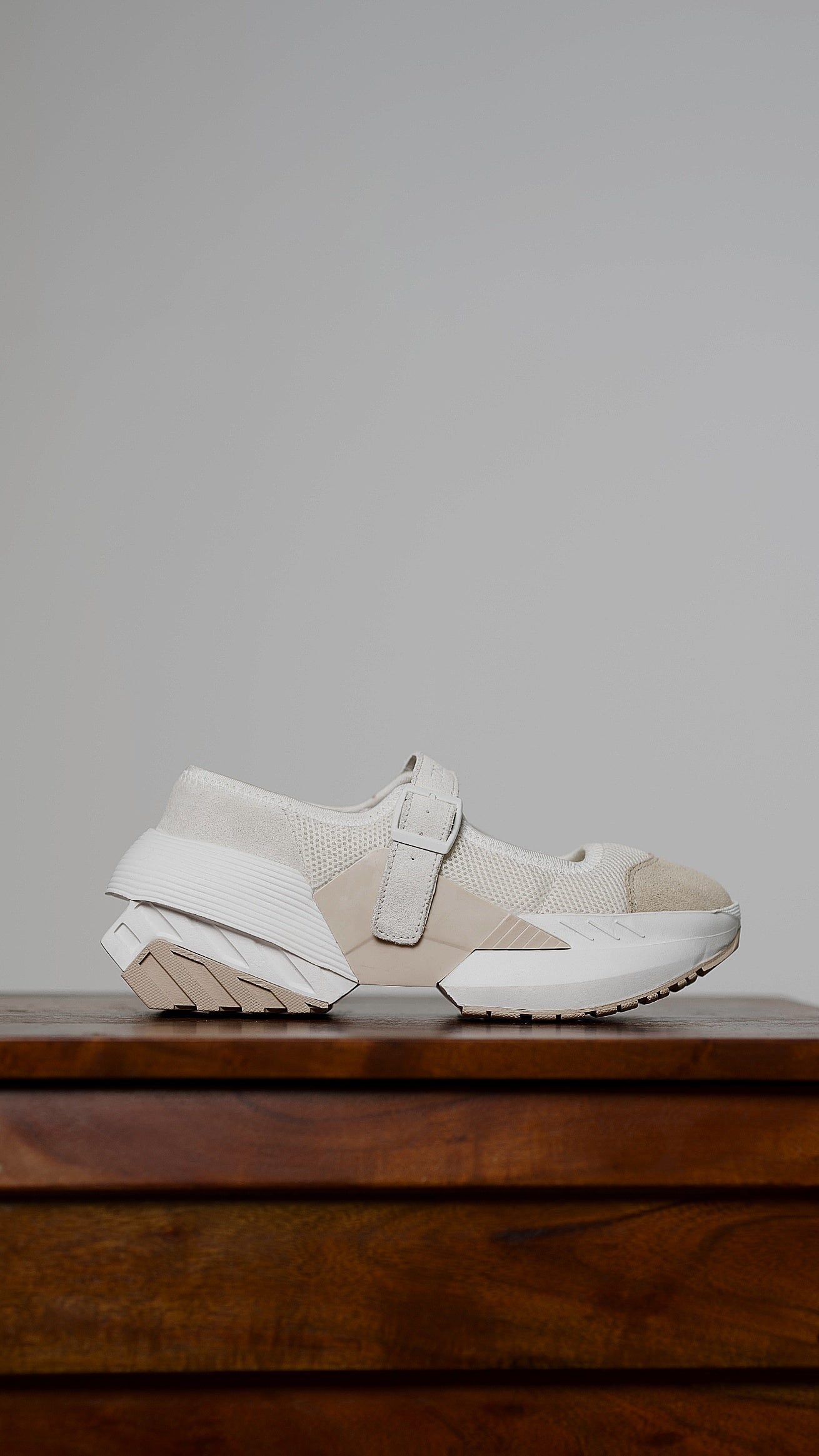
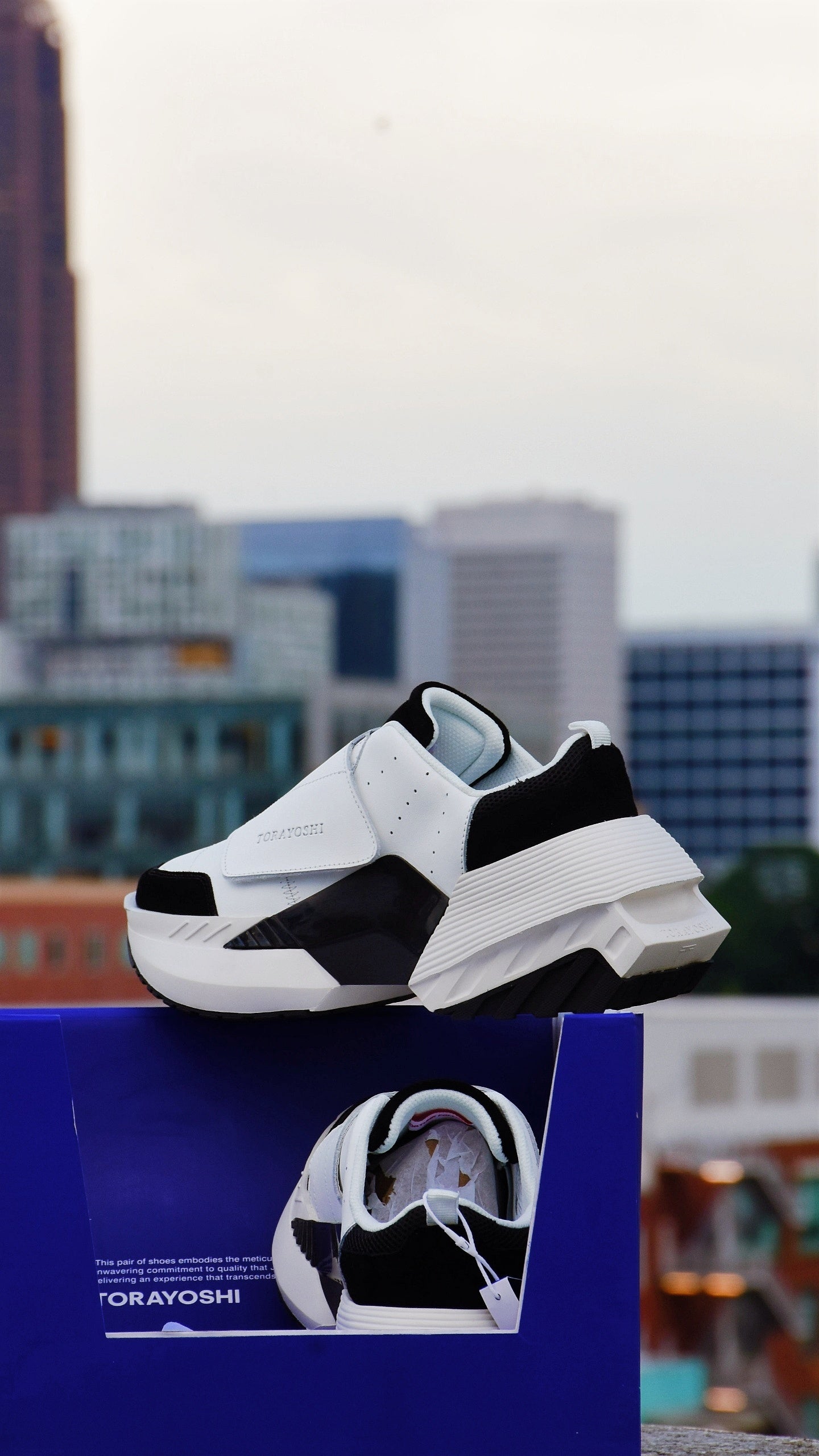
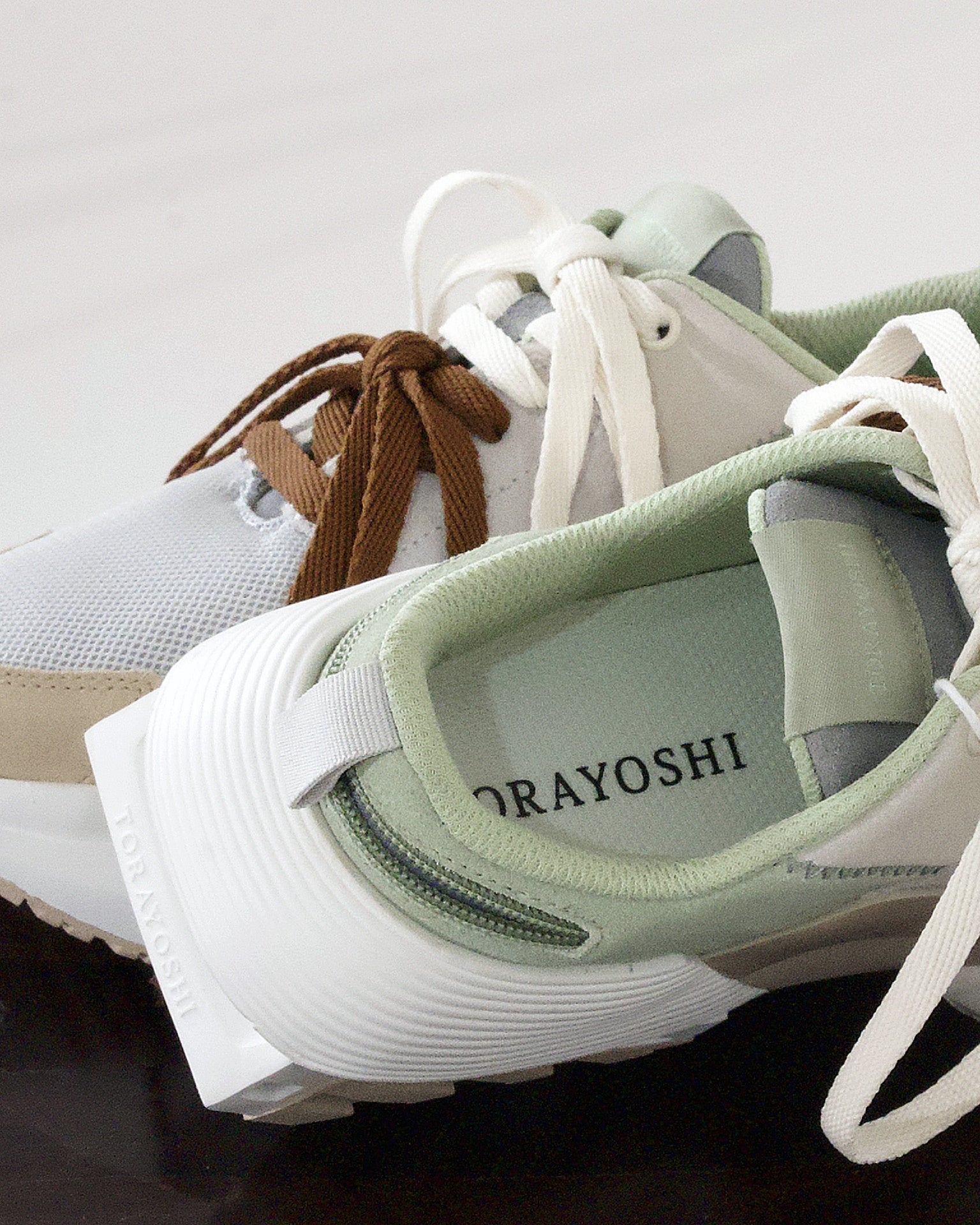
Rather than reproducing traditional architectural motifs literally, we studied the geometry beneath them. The layered construction of roof tiles informed the repeated lines and stepped surfaces within the sole. The strong horizontal roofline influenced the way the sole carries visual weight across the foot. Angular transitions found within structural roof elements were reinterpreted as geometric cuts, ridges, and changes in volume. Most importantly, the sole was considered as an architectural foundation. Just as a roof is composed of individual elements that become one continuous silhouette, the Torayoshi EDO76 sole brings different surfaces and structural sections together so that they feel like parts of a single form.
Architecture became footwear—not through decoration, but through construction.
Rhythm Without Ornament
Japanese architecture often demonstrates that detail does not need to become decoration. Repetition itself can create character.
A sequence of roof tiles.
The interval between structural beams.
A change in elevation.
A precisely controlled edge.
We approached the sole with the same restraint. Lines repeat, surfaces overlap and volumes shift, but each element remains part of the overall geometry. The intention is for the influence to be felt before it is recognized.
Built From an Idea
For Torayoshi, Japanese influence is not about placing familiar symbols onto a product. It is about translating principles into form. The roof became particularly meaningful because it represents something fundamental to our approach: complexity resolved into clarity. Many individual structures work together, yet the eye sees one composed silhouette. The same thinking guides our footwear. From the upper to the sole, every transition is considered as part of a larger whole. What begins as architecture becomes proportion. What begins as repetition becomes rhythm. What begins as structure becomes movement.
The reference may come from the past.
The expression belongs to the present.